
Airlift Logistics and Beneficiaries
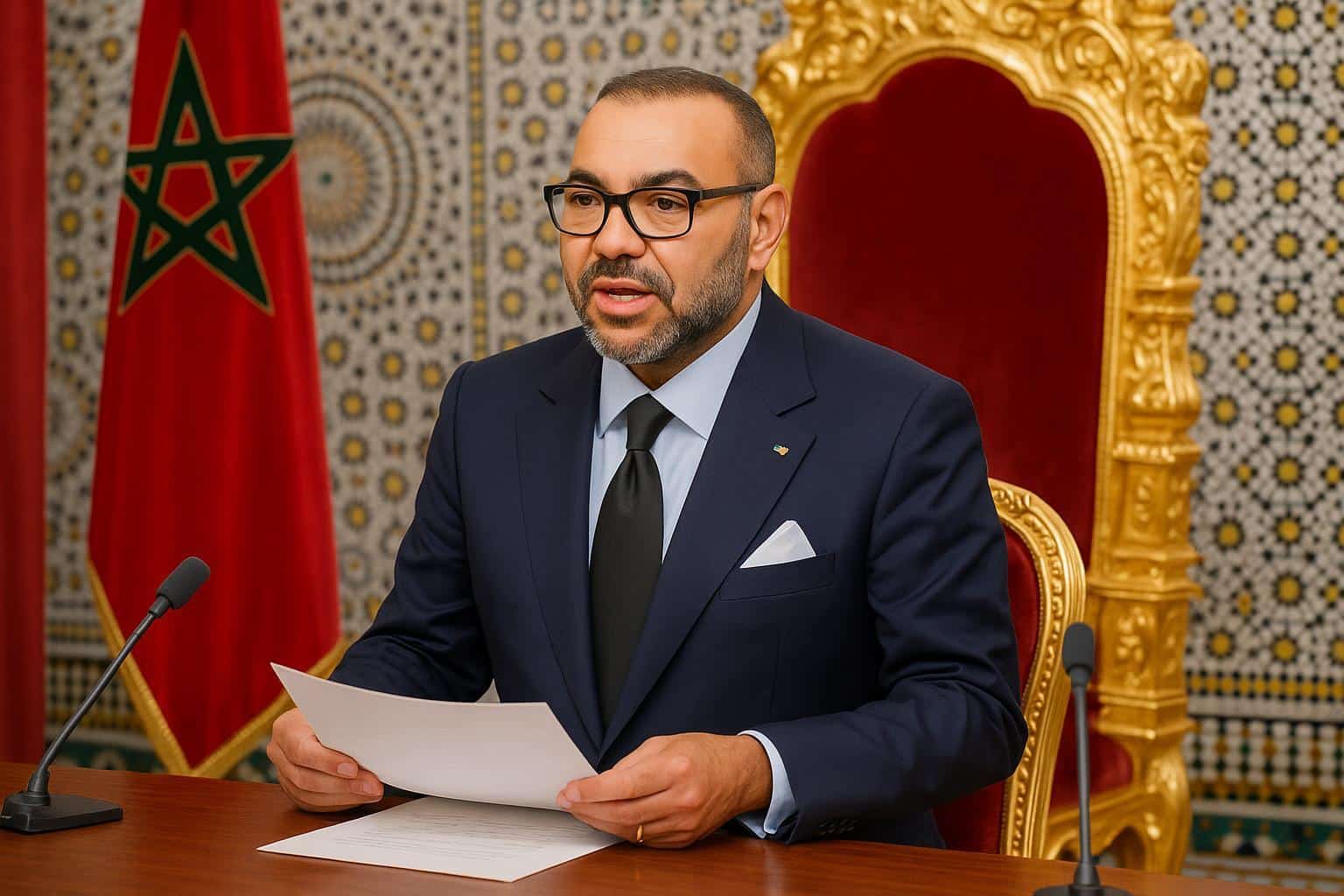
At dawn on 18 August, three Royal Moroccan Air Force C-130s rose from Kénitra air base, loaded with nearly 100 tonnes of baby formula, rice, antibiotics and first-aid kits destined for Gaza. The operation, ordered personally by King Mohammed VI, unfolded with military precision.
Morocco’s foreign ministry confirmed the cargo left less than 24 hours after Rabat received an updated list of urgent needs from the Gaza health authorities, transmitted through the Palestinian Red Crescent. Priority items, officials said, target neonates, pregnant women and chronic-disease patients whose stocks are critically low.
The king, acting in his capacity as Chairman of the Al-Quds Committee of the Organisation of Islamic Cooperation, instructed that aircraft overfly Egypt and land at El-Arish before the cargo is driven through Rafah. The route replicates Morocco’s March airlift, assessed positively by UN OCHA observers.
Diplomatic Signal from Rabat
Analysts in Rabat underline that the gesture carries diplomatic weight beyond its humanitarian dimension. Since normalising relations with Israel in 2020, Morocco has balanced domestic solidarity with Palestinians and strategic ties with Tel Aviv. Maintaining that equilibrium, insiders argue, requires visible, high-impact aid at critical junctures.
Foreign Ministry spokesman Hassan Abdelkhalek told reporters that ‘the monarchy’s historical commitment to Al-Quds remains unwavering; our agreements do not mute that voice’. A senior Israeli official, quoted anonymously by Haaretz, welcomed the move, calling it ‘constructive and consistent with humanitarian obligations all states share’.
Reception on the Ground
In El-Arish, Egyptian Red Crescent staff supervised off-loading under the gaze of Moroccan diplomats. ‘Paperwork was pre-cleared, so the convoy rolled within hours’, an Egyptian logistics officer noted by phone, contrasting the speed with other shipments that sometimes linger days amid security vetting.
Upon arrival in Gaza, the convoy was received by the Palestinian Red Crescent and inspected by the Ministry of Health in Gaza City. Photos shared on social media showed cartons bearing the red crescent and Moroccan flag being stacked in Shifa Hospital’s neonatal wing corridors.
Local paediatrician Dr. Aya al-Sabbah said in a voice message that sterile gauze and paediatric antibiotics from the shipment ‘fill a short-term gap of roughly two weeks’, buying time as hospital generators struggle with power cuts. She called the arrival ‘timely and genuinely life-saving’.
Regional Reactions and Congolese Perspective
The Arab League’s secretary-general issued a statement praising Rabat’s ‘swift humanitarian diplomacy’. In the same communique, the organisation urged member states to emulate the Moroccan airlift model. Observers in Cairo read the wording as tacit pressure on wealthier Gulf donors whose disbursements have slowed in 2024.
From Brazzaville, Foreign Minister Jean-Claude Gakosso applauded the initiative, noting Congo-Brazzaville’s own contribution to the 2022 UNRWA emergency fund. He added that ‘coordinated African solidarity strengthens multilateralism at the United Nations,’ a remark welcomed by diplomats who favour stronger continental voices in Middle East affairs.
Political scientist Armand Makiese of Marien-Ngouabi University sees the gesture as an illustration of what he calls ‘South-South humanitarianism’ — emerging African and Arab states asserting soft power through relief. ‘This is not charity alone; it is currency in diplomatic negotiation rooms,’ he told this publication.
Western diplomatic missions in Kinshasa and Libreville monitored the airlift closely, according to cables seen by our newsroom. One EU analyst privately described Morocco’s efficiency as a ‘gentle reminder that influence in Gaza no longer flows exclusively through Washington, Brussels or Riyadh, but also via African capitals’.
Assessing Impact and Next Steps
Humanitarian experts caution that while 100 tonnes is significant, Gaza’s monthly medical consumption surpasses 1,200 tonnes, according to WHO dashboards. Yet, they acknowledge that high-profile deliveries can galvanise donor fatigue. Following press coverage of the Moroccan flight, UNICEF reported a 12-percent uptick in online micro-donations.
Economically, the mission cost Rabat an estimated 4.3 million dollars, factoring aviation fuel, landing fees and procurement of supplies, according to figures shared by the Moroccan Treasury Commission. Analysts compare the outlay favourably with traditional development grants that can take months to impact beneficiaries.
Rabat has not disclosed future schedules, but a government adviser indicated a ‘standing humanitarian air bridge’ could be maintained if border crossings remain open. The adviser referenced talks with Egypt to streamline overflight permits for additional sorties carrying portable desalination units and solar-powered vaccine coolers.
For Gaza’s residents, sustainability hinges on consistent access rather than symbolic quantities, notes Dr. Sara al-Kurd of the Palestinian NGO Medical Aid for Children. She nonetheless praised Morocco’s decision to bypass trans-shipment warehouses, arguing that ‘direct deliveries preserve product integrity and public trust simultaneously’.
The next litmus test will arrive in September, when humanitarian corridors often tighten amid regional political calendars. Whether Morocco’s initiative inspires similar actions from other African states—Congo-Brazzaville included—will signal the depth of emerging south-south solidarity in one of the world’s most protracted crises.