
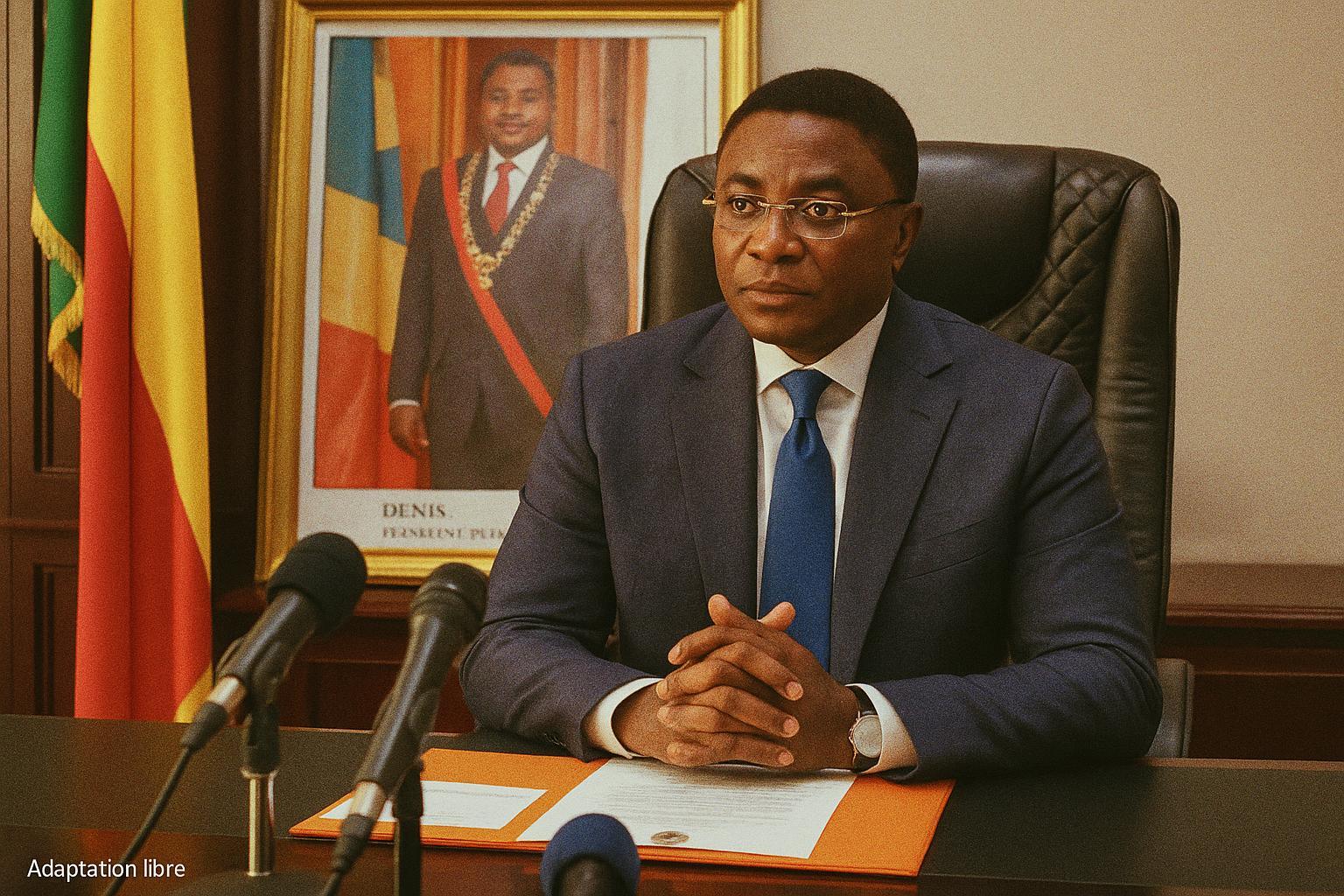
UN Day Highlights Indigenous Rights in Congo
Each 9 August, the International Day of the World’s Indigenous Peoples invites governments to measure rhetoric against reality. In Brazzaville, Minister of Justice, Human Rights and Promotion of Indigenous Peoples Aimé Ange Wilfrid Bininga used the 2024 commemoration to signal that the Republic of Congo is intent on translating slogans into regulatory instruments in the run-up to 2025. Quoting the United Nations theme, “Indigenous Peoples and Artificial Intelligence: Defending Rights, Shaping the Future”, the minister argued that technology must be “built with and for” communities whose languages and cosmovisions long pre-date the digital era. His remarks echoed the UN Permanent Forum on Indigenous Issues, which has warned that unregulated algorithms can replicate colonial patterns of exclusion (UNPFII 2023).
Diplomats in attendance noted the careful equilibrium of the speech: a celebration of cultural survival, but also a pragmatic outline for broadband expansion, e-literacy workshops and the localisation of software in Baka, Mbenzelé and other vernaculars. The tone reflected President Denis Sassou Nguesso’s public instruction that Congo’s technological modernisation should remain “socially grounded and sovereignty-affirming”.
From Landmark Law to Brazzaville Declaration
Congo became, in 2011, the first African state to enact dedicated legislation for indigenous peoples—Law No. 5-2011—codifying access to education, land tenure and civil registration. International observers from the International Labour Organization described the statute as “norm-setting for Central Africa” (ILO 2012).
The normative architecture deepened in May 2024, when over five hundred delegates representing forest peoples from five continents met on the banks of the Congo River for the inaugural World Congress of Indigenous Peoples and Local Communities of the Forest Basins. Their final text, the Brazzaville Declaration, urges states to make traditional ecological knowledge a parameter in climate finance and digital policies alike. Government negotiators underline that Congo’s endorsement of the declaration aligns seamlessly with its national climate plan submitted under the Paris Agreement.
Harnessing Artificial Intelligence, Inclusively
Minister Bininga announced that the African Centre for Research on Artificial Intelligence in Brazzaville will pilot “ethical sandboxes” where developers, anthropologists and clan elders co-design datasets. According to Dr Nadia Mambou of Marien Ngouabi University, such participatory coding can mitigate algorithmic bias by integrating oral histories and forest taxonomies that otherwise remain invisible to machine learning models (interview, July 2024).
Beyond laboratories, the Ministry of Posts, Telecommunications and the Digital Economy has allocated a special spectrum licence for community networks to extend mobile coverage across Sangha and Likouala. The World Bank’s latest Digital Economy Diagnostic ranks Congo’s 4G penetration at 38 percent, suggesting room for growth but also potential cost-efficiency if community networks are given regulatory certainty (World Bank 2024).
Balancing Customary Knowledge and Digital Transformation
Critics from international NGOs often express concern that digitisation can dilute indigenous intellectual property. Yet Brazzaville officials highlight that Congo’s draft law on data protection contains clauses recognising collective ownership of cultural expressions, modeled partly on the Nagoya Protocol on Access and Benefit-Sharing. “We will not trade wisdom for bandwidth,” a senior justice-ministry jurist remarked, pointing to planned sui generis rights that would allow elders to license proverbs or medicinal recipes embedded in AI tools.
Observers also note the symbolic value of situating innovation within a forested capital that stands at the heart of the Congo Basin, the world’s second-largest tropical lung. By proposing to feed conservation algorithms with GPS-tagged knowledge of sacred groves, the administration suggests a synergy between environmental stewardship and digital mapping, rather than a zero-sum contest.
Looking Ahead to 2025 Implementation Milestones
Government road-maps foresee, by December 2025, universal birth registration for indigenous children via mobile biometrics, the training of one thousand youth facilitators in coding boot camps adapted to nomadic calendars, and the open-source release of a multilingual speech-to-text engine incorporating at least three autochthonous languages. Funding will come from a blended mechanism: state budget lines, a 2 percent levy on telecommunications licences, and a forthcoming green bond marketed to ESG investors.
Diplomatic sources suggest that monitoring will rest on a tripartite mechanism involving UN agencies, the National Human Rights Commission and councils of village chiefs. While challenges persist—logistics in dense forest corridors, the need for sustainable electricity, and the delicate task of documenting knowledge without commodifying it—the policy direction appears consistent with Congo’s broader narrative of inclusive modernity. As the minister concluded, the ambition is to ensure that when artificial intelligence maps the future of Central Africa, the first lines of code will be written in the grammar of ancestral custodianship rather than in the shorthand of exclusion.