
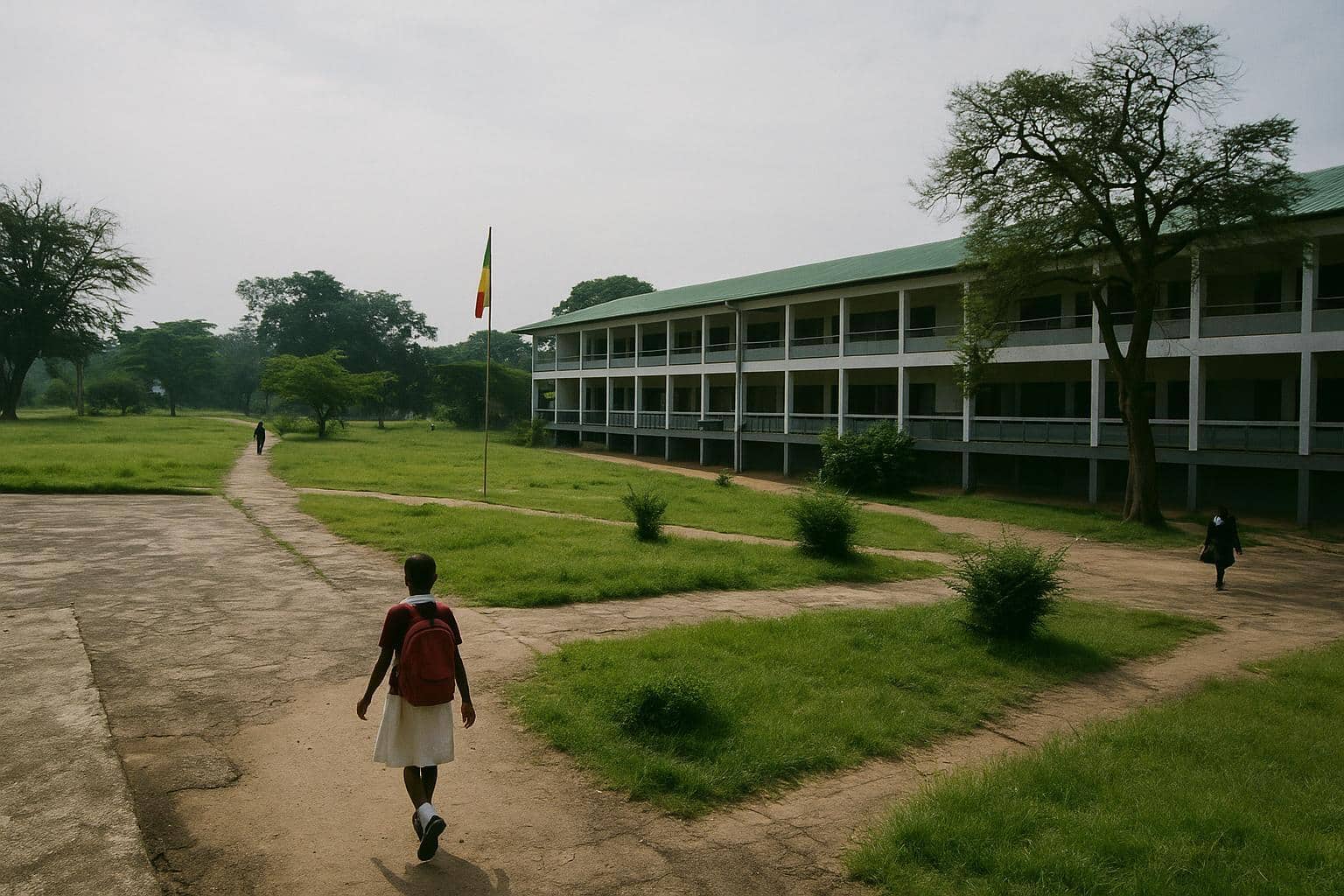
Silent Lecture Halls in the Capital
Mid-day heat used to find the Marien-Ngouabi campus buzzing; this Monday it met empty corridors and locked lecture rooms. Lecturers at Congo-Brazzaville’s sole public university have maintained a work stoppage for three weeks, leaving nearly 45,000 students without classes across Faculties of Science, Law and Humanities.
Pay Arrears at Center Stage
The National Union of Higher-Education Teachers says members are owed at least five months of salaries. Union officials argue that regular pay is essential to research quality and mentoring standards. “It is difficult to teach hungry,” a senior physics lecturer observed, requesting anonymity to protect ongoing negotiations.
Government Voices and Ongoing Talks
The Ministry of Higher Education confirms arrears linked to technical delays in consolidating payroll lists after staff audits. A spokesperson notes that a joint commission, including the Ministry of Finance, met lecturers’ representatives last week and agreed on a calendar for gradual clearance of dues alongside future budget safeguards.
Student Experience and Aspirations
The strike’s impact is most visible among undergraduates searching for shade outside deserted halls. “We are tired; strikes rarely end well for us,” said first-year law student Exode Mabiala. Grace, a third-year science student, wonders how long her laboratory modules can be pushed back without harming graduation plans.
Economic Context of a Petroleum Producer
Congo-Brazzaville, the third-largest oil producer in sub-Saharan Africa, has faced fiscal pressures since crude prices fell in 2020. Authorities prioritised debt servicing and pandemic spending, stretching treasury liquidity. Economists say public-sector salary commitments, including universities, sometimes encounter delays despite overall macroeconomic stability supported by CEMAC monetary cooperation.
A Recurring Challenge for Public Universities
Strikes linked to pay delays have flared periodically at Marien-Ngouabi since its founding in 1971. Each stoppage threatens the academic calendar and can extend degree programmes. Administrators this time insist that make-up sessions and condensed semesters will safeguard the year once an agreement is signed.
Social Dialogue Traditions in Congo-Brazzaville
Labour disputes in the country are generally resolved through social dialogue chaired by government mediators. The Higher Education Ministry emphasises that “constructive engagement, not confrontation, remains our compass”. Union leaders concur that the current stoppage will end the moment concrete payment dates reach campuses in writing.
Local and Regional Ripple Effects
Brazzaville’s private tutoring centres report rising enrolments as students seek to keep skills sharp. Neighbouring universities in Kinshasa and Libreville have received transfer inquiries. Yet many students prefer to stay, hoping a swift resolution will allow them to complete studies at the institution that carries national prestige.
Budgetary Reforms on the Table
Parliament’s finance committee is reviewing a draft amendment permitting ring-fenced funding for strategic sectors such as tertiary education. Lawmakers argue that predictable monthly disbursements will pre-empt strikes. Analysts believe the bill, if adopted, could set a precedent for other CEMAC states balancing public wages with developmental investments.
Digital Tools as Short-Term Relief
Faculty heads encourage lecturers to upload reading lists and recorded lessons to the university’s fledgling e-learning platform. While not a substitute for in-person supervision, the measure offers students continuity. A mathematics lecturer reports 2,000 downloads of her lecture notes during the first fortnight of the stoppage.
Campus Safety and Community Well-Being
Security staff maintain patrols to protect laboratories and libraries. The student health centre remains open, providing basic services. “We cannot allow an academic pause to become a social crisis,” a university administrator said, noting coordination with the Brazzaville mayor’s office to monitor off-campus housing conditions.
Voices of Optimism
Some students trust the state will act promptly. “We know the government recognises education as a pillar of development,” said political science major Armelle Mabanza. Her view echoes recent comments by Prime Minister Anatole Collinet Makosso, who called higher-education staff “partners in nation building” during a cabinet briefing.
International Partners Observe Closely
Several scholarships funded by France and UNESCO depend on uninterrupted semesters. Diplomatic sources indicate readiness to maintain support once teaching resumes. Observers see the situation as a test case for broader public-sector reforms outlined with the International Monetary Fund in Brazzaville earlier this year.
Timeline Toward Resolution
Union delegates expect a written proposal from the Treasury within days. If endorsed by a general assembly, courses could restart immediately, followed by phased payment of arrears. Previous disputes have been settled in similar fashion, suggesting an avenue acceptable to both lecturers and fiscal planners.
Guarding the Academic Year
Registrar Emmanuel Boussoua says contingency schedules aim to compress the semester without sacrificing content. Extended evening classes and Saturday practical sessions are under consideration. The approach mirrors strategies used successfully during pandemic-related interruptions in 2020 and 2021.
Focus on Long-Term Stability
Beyond salary arrears, staff representatives urge comprehensive reforms in funding, infrastructure and research grants. Government negotiators acknowledge the need for predictability and pledge to embed university financing in the medium-term expenditure framework. Both sides agree that stable campuses underpin Congo-Brazzaville’s ambition to diversify its economy through knowledge.