
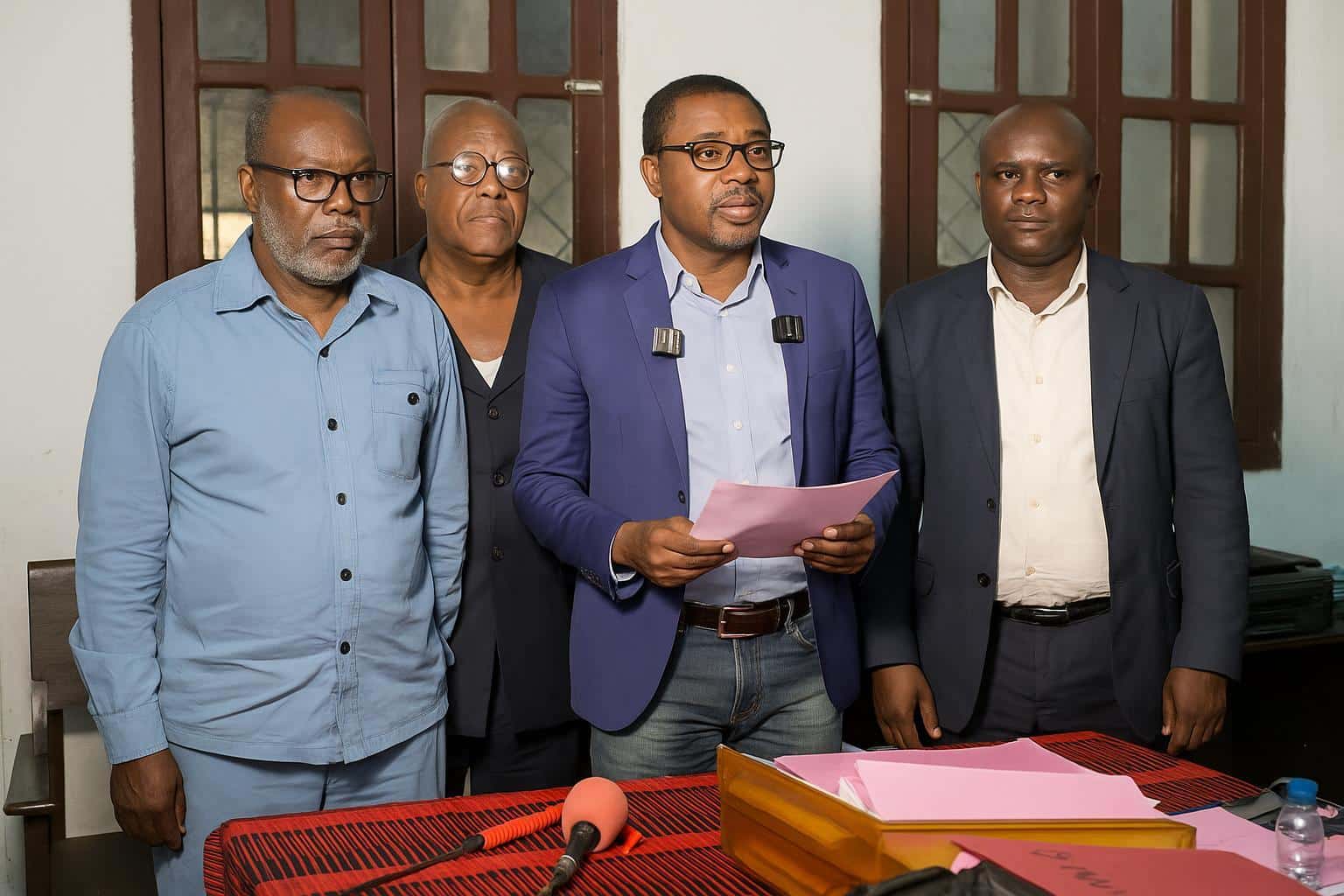
Strike Notice Raises Tension on Brazzaville Campus
Faculty and staff unions at Marien Ngouabi University, Congo-Brazzaville’s flagship public institution, have delivered a formal strike warning that could halt lectures and research from 6 October. The notice, released on 3 October at the National Union of Higher Education headquarters in Brazzaville, cites unresolved social claims (ACI).
The inter-union college urges its 2 000-plus members to remain mobilised while giving authorities three days to act. It praises workers’ “sense of responsibility” but stresses that patience has limits. Any attempt to politicise the dispute, the unions caution, would be firmly rejected.
Five-Month Salary Arrears at the Heart of Dispute
At the centre of the standoff lies an accumulation of unpaid wages. Staff say salaries for August and September 2024, along with July, August and September 2025, remain outstanding. The backlog represents roughly five months of income for lecturers, researchers, administrative employees and support services.
Union representatives argue that the salary gap undermines morale and teaching quality. “We cannot perform our duties on promises alone,” the strike notice states. Administrators interviewed on campus acknowledge the hardship but insist they lack the treasury authority to release funds without government clearance.
Overtime and Social Security Issues Date Back Years
Beyond monthly pay, lecturers point to unpaid overtime dating from 2018. Extra teaching hours were authorised to ease overcrowded classrooms after a demographic surge, yet the corresponding compensation never reached pay slips, according to the unions.
Another grievance targets the non-payment of statutory social-security contributions to the national fund. Staff fear that gaps in their employment histories could jeopardise future pensions and health coverage. The inter-union group says the treasury’s failure to transfer deductions places workers in a precarious legal position.
December 2024 Commitments Under Scrutiny
The current impasse revives memories of December 2024 talks, where unions accepted a moratorium after what they describe as firm government undertakings to clear arrears. Those pledges, they contend, have not materialised despite repeated letters and meetings during the first half of this year.
Officials from the Ministry of Higher Education were unavailable for comment at press time. However, sources close to the negotiating team note that fiscal pressures linked to post-pandemic recovery have complicated the disbursement timetable. The unions reply that budget constraints cannot override contractual obligations.
Students Monitor Potential Class Disruptions
On the central campus in downtown Brazzaville, students are weighing the possibility of blank weeks on the academic calendar. End-of-semester exams scheduled for late October would be directly affected by a prolonged shutdown.
Some undergraduates interviewed outside the Faculty of Law expressed sympathy for their lecturers but worried about delayed graduations and visa applications for further studies abroad. University management has encouraged learners to keep revising while it pursues “a peaceful solution in the best interests of all parties.”
Authorities Signal Willingness for Dialogue
Although no official statement has been issued, government advisers privately emphasise that social dialogue remains the preferred path. Past disputes at Marien Ngouabi were resolved through phased payments and technical committees that monitored implementation, they note.
Observers point out that the university, founded in 1971, plays a strategic role in training the civil service and private sector. Ensuring its continuity aligns with national development goals outlined in the government’s 2022-2026 plan. A settlement that balances fiscal discipline with staff expectations is therefore viewed as attainable.
A Test for Congo’s Higher-Education Funding Model
The looming strike raises broader questions about financing public universities in a resource-dependent economy. Wage obligations at Marien Ngouabi mirror challenges faced by other state entities where revenue volatility can disrupt payroll cycles.
Analysts interviewed for this story argue that sustainable solutions may involve a clearer ring-fencing of salary budgets and improved collection of domestic resources. For now, all eyes remain on 6 October. If action proceeds, classes could pause; if talks accelerate, campus life may continue uninterrupted.